Why preserved moss changes colour indoors and what it means for your display
What preserved moss is and why its colour matters
Preserved moss is natural moss that has been treated to replace its internal water with a glycerine-based solution, often combined with a food-grade dye. This process stops the plant from drying out and keeps it soft, green, and alive-looking for years without needing water or light. Unlike dried moss, which becomes brittle and fades, preserved moss retains a supple texture and a consistent colour as long as it is kept in the right indoor environment. For anyone using indoor moss decor, understanding why that colour can shift is the first step to keeping a display looking fresh.
Colour change in preserved moss is almost always a reaction to its surroundings. The preservation process locks in a stable base colour, but factors such as humidity, direct sunlight, dust, and airflow can slowly alter that shade over weeks or months. The change is usually gradual and not a sign that the moss is dying, it is already preserved and will never grow or decay. Instead, the colour shift is a physical or chemical response to the environment, and in most cases it can be prevented or reversed with simple adjustments. Knowing what triggers the change lets you enjoy your indoor moss decor for years without surprises.
How humidity affects colour stability
Moisture in the air is one of the biggest influences on preserved moss colour. When the relative humidity in a room stays high, above 60 or 70 percent, the glycerine in the moss can absorb excess moisture from the air. This can make the moss feel slightly damp and can cause the dye to migrate or dull, leading to a patchy, washed-out look. On the other hand, very dry air (below 30 percent humidity) can draw moisture out of the glycerine, making the moss feel stiff and causing the colour to look flat or darker in places.
The ideal range for preserved moss is between 40 and 60 percent humidity, which is comfortable for people too. Placing your display in a bathroom, kitchen, or laundry room where steam is frequent is risky unless there is good ventilation. A dehumidifier in a damp basement or a small humidifier in a dry office can keep conditions stable. A simple hygrometer, placed near the moss, lets you monitor the air without guesswork. A consistent humidity level is the single most effective way to protect colour stability in your display.
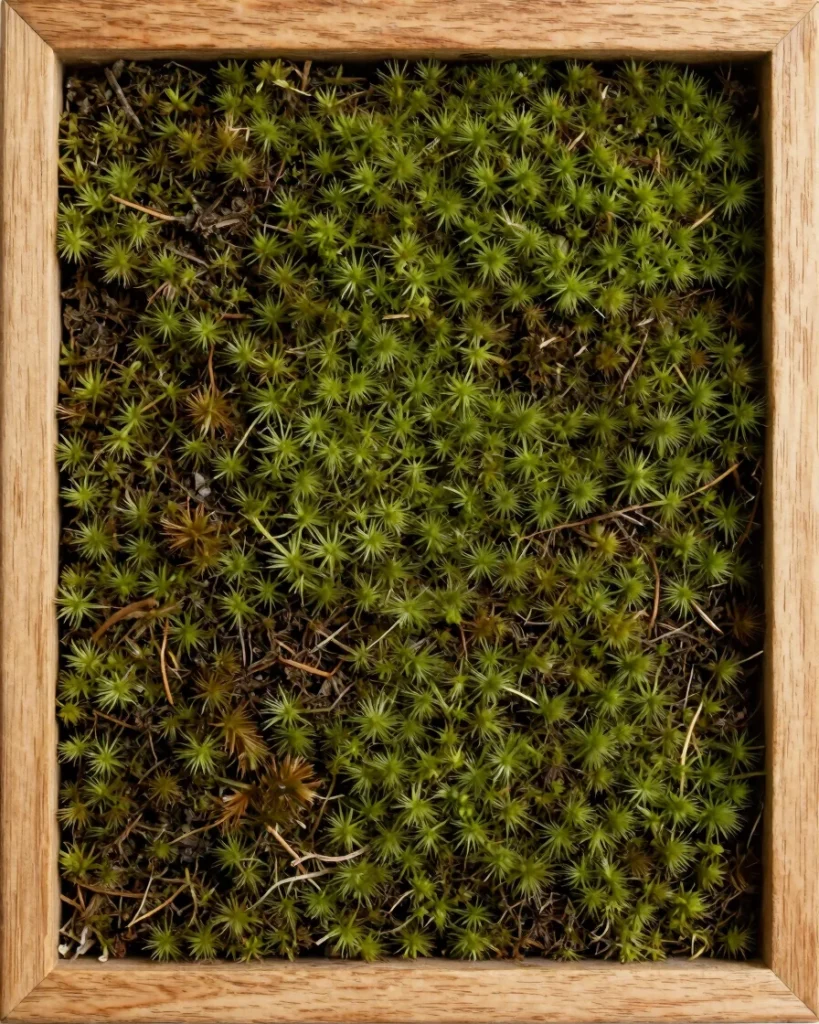
Direct sunlight and fading
Sunlight is another common cause of colour change. Preserved moss is not living, so it does not need light, but the dye used during preservation can fade when exposed to strong UV rays for extended periods. A piece of moss art hung in a window that gets direct afternoon sun may show noticeable fading within a few months. The green tones tend to bleach first, leaving a yellowish or pale green cast that can make the display look tired.
The fix is simple: keep preserved moss out of direct sunlight. Indirect natural light from a north-facing window or artificial room light is fine. If you want a piece on a sun-facing wall, consider a UV-filtering film on the glass or a sheer curtain that diffuses the light. Rotating the display every few months, if it is in a frame, can also help any fading occur evenly, so it is less noticeable. For most indoor settings, a spot away from windows or under a skylight with a light-diffusing blind is ideal. Direct sunlight is not the enemy of all decor, but for preserved moss it is a colour risk that is easy to manage.
Dust and airflow: the quiet culprits
Dust settling on preserved moss might seem like a surface issue, but it can affect colour over time. A fine layer of dust absorbs light unevenly, making the moss look dull or grey. It also traps moisture and particles that could interact with the glycerine or dye, especially in rooms with cooking grease, smoke, or airborne pollutants. Over months, a dusty display can lose its vibrancy even if the moss itself is unchanged.
Regular dusting with a soft brush, a clean makeup brush or a paintbrush with synthetic bristles, lifts dust without damaging the moss. A gentle puff of air from a can of compressed air or a hairdryer on the cool, low setting also works. Avoid water, cleaning sprays, or wiping with a cloth, which can disturb the dye or leave residue. Airflow matters too: stagnant air around a display can let dust settle more heavily, while a room with steady, gentle air movement keeps the moss cleaner. But avoid placing the moss directly in the path of an air conditioner or heater vent, because the constant dry blast can dehydrate the glycerine and dull the colour. A balanced approach to airflow, neither a dead pocket nor a wind tunnel, supports long-term colour stability.

Practical steps for moss display care
Even with the best placement, occasional adjustments are needed. Good moss display care starts with knowing your room's conditions and reacting to small changes before they become obvious. If you notice the moss starting to look lighter or patchy, check the humidity first. If it feels stiff, the air may be too dry. If it feels clammy, the air may be too damp. A spot near a window that gets strong morning light might be fine in winter but cause fading in summer when the sun is higher and stronger. Moving the display a few feet can make all the difference.
Dusting every two to four weeks keeps the surface colour even. If the moss has been in a dry room for a long time and looks a bit faded, you can sometimes refresh the colour by placing a bowl of water near the display (not on it) for a day or two, letting the ambient moisture reach the moss. Do not mist or spray the moss directly, that can cause dye bleeding. The same gentle rehydration approach works if the moss has lost its softness. Patience is key; colour often returns over a few days as the glycerine rebalances with the air.
What to watch for and when to act
Not every colour change is a problem. Some natural moss species have slight variations in shade across a piece, and the preservation process can create subtle differences that are part of the charm. But if you see a distinct shift in one area, a dark patch that was not there before, or a yellowing that spreads, check the environment around that spot. A heat source like a radiator, a lamp, or an electronic device can create a microclimate that causes localised fading or drying. Similarly, a vent blowing directly on one corner of the display can dry out that section faster, leaving the rest of the moss looking fine.
Good moss display care also means knowing when to leave well enough alone. Preserved moss is durable and forgiving; small colour shifts often stabilise on their own as the seasons change. If a piece has been in the same spot for a year and has developed a gentle patina, that is part of its life story. The goal is not to freeze the colour forever, but to extend its fresh look as long as possible. A little fading in a display that gets daily admiration is a sign of a well-loved piece, not a failure.

Bringing it all together for your indoor moss decor
Preserved moss offers a low-maintenance way to bring a natural element indoors, but it does respond to its surroundings. Colour changes are not a defect; they are a signal from the moss about the environment it sits in. By controlling humidity, avoiding direct sunlight, keeping dust at bay, and managing airflow, you can keep your display looking vibrant for years. The few minutes spent checking the room conditions and dusting with a soft brush are a small investment compared with the longevity you gain. For anyone using indoor moss decor, understanding these simple principles turns a decorative choice into a lasting one.